Archive / Temiar
Temiar
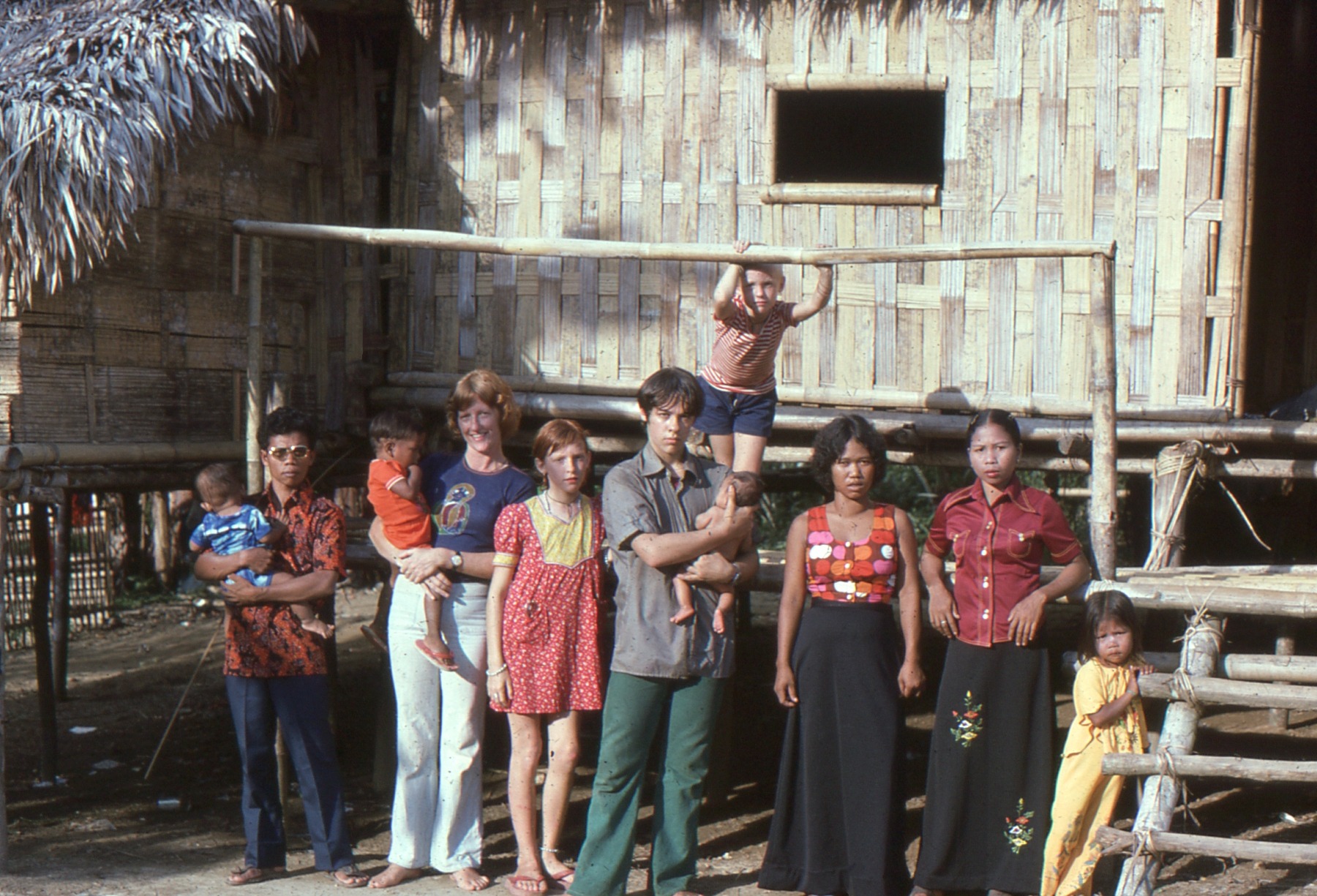
Sue’s relationship with the Temiar began in the early 1970s when she took her three children to live in the Malaysian jungle for two years. What began as an extraordinary family experience became something much longer: friendships, research, return visits, shared projects, family events, learning and relationships that have continued across generations.
This part of the living archive brings together photographs, stories, journeys, celebrations and creative projects from those years. Through them, visitors can follow some of the friendships, family connections and shared learning that continue to bring Sue and Andy together with Temiar friends and families. Each image and memory is one part of a much larger story.
1970s
Living there
Getting there in the 1970s was an adventure in itself. The journey from Kuala Lumpur took around two days. First came the train to Gua Musang, which at the time could only be reached by rail. From there the family travelled by four wheel drive along a logging road, then upriver in a dugout canoe, before trekking through the jungle to the community where they would live.
Once there, life became about far more than being somewhere remote. Sue and her children lived alongside Temiar friends and families, sharing food, journeys, rivers, conversations, work, play and celebrations.
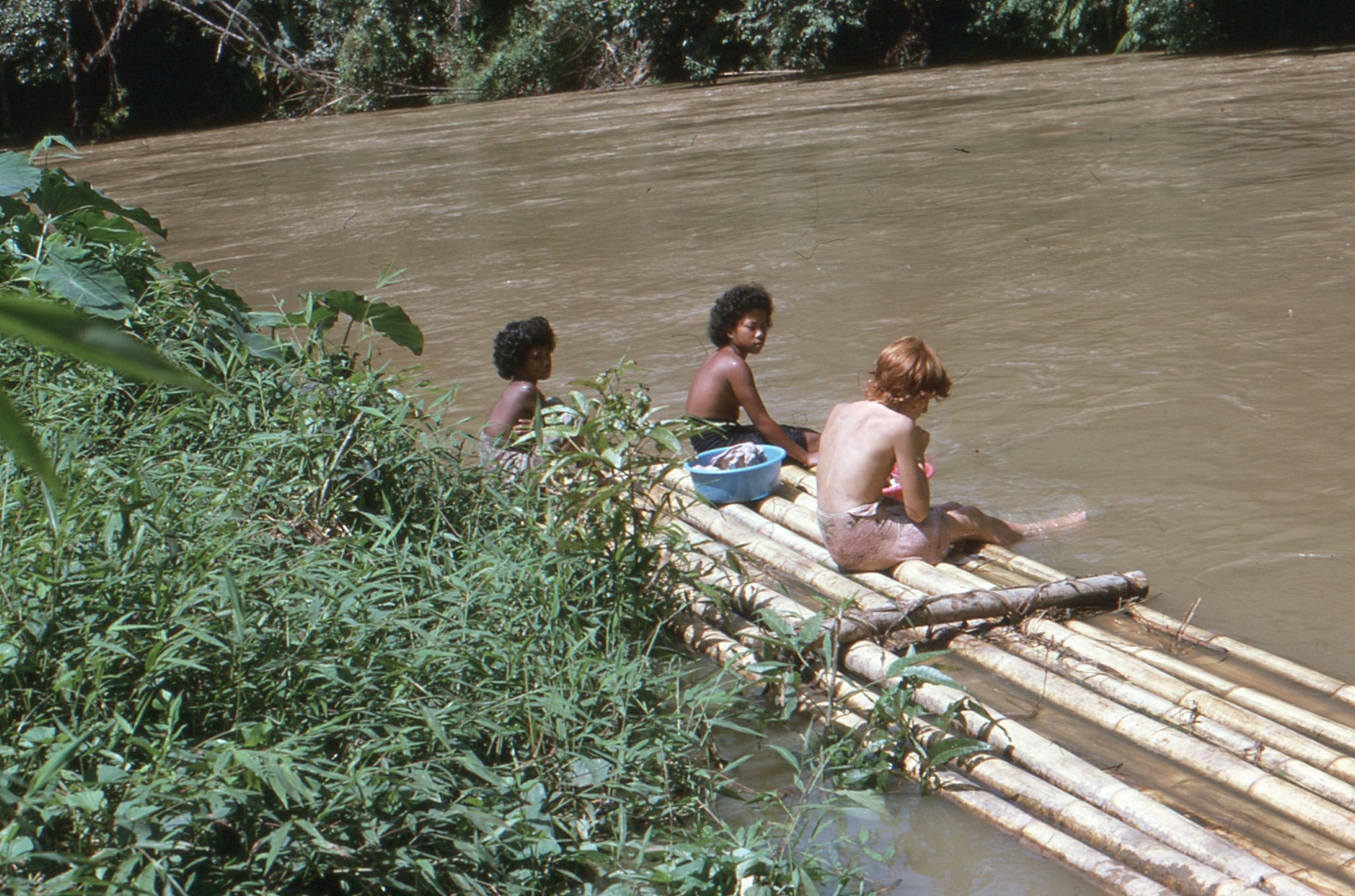
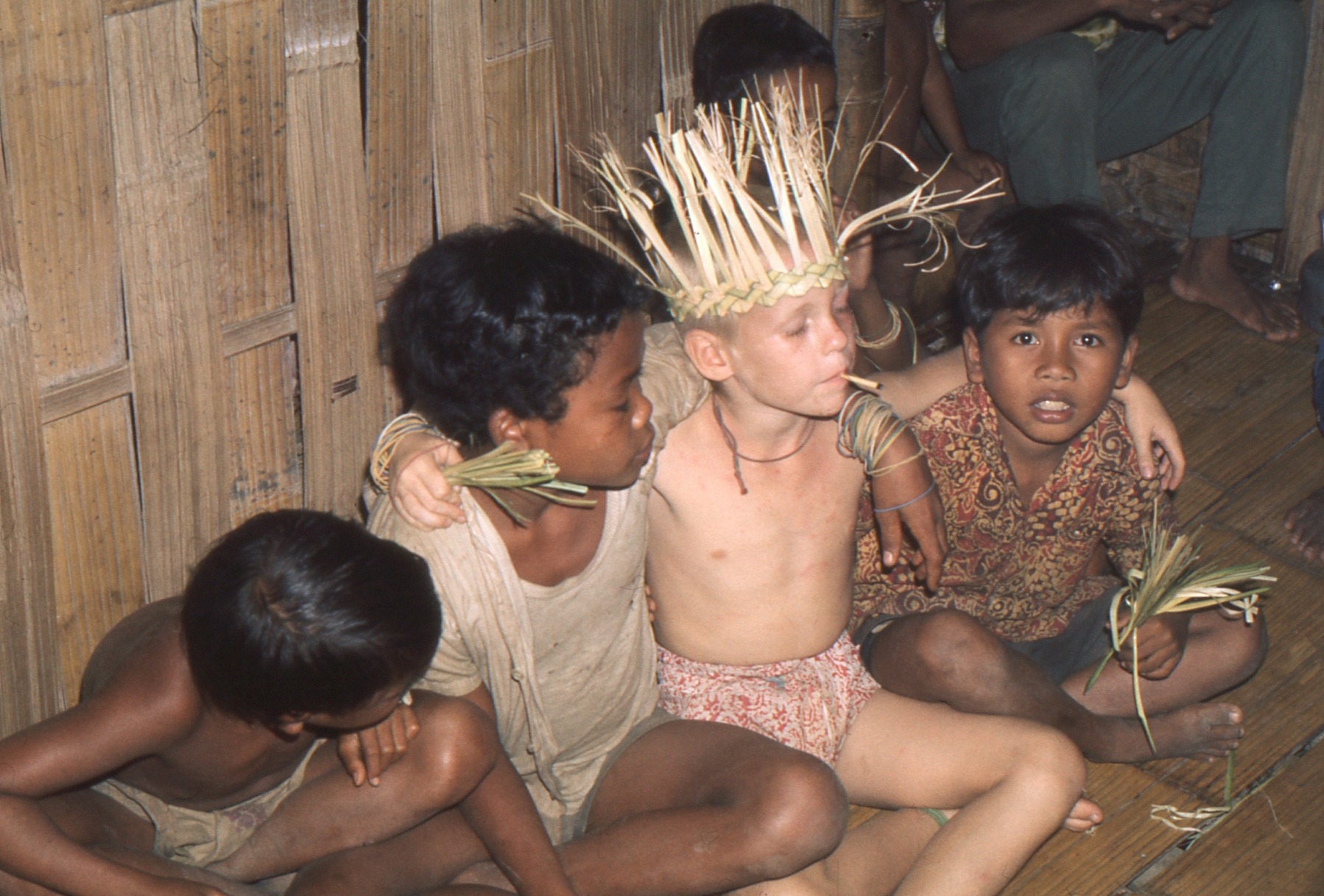
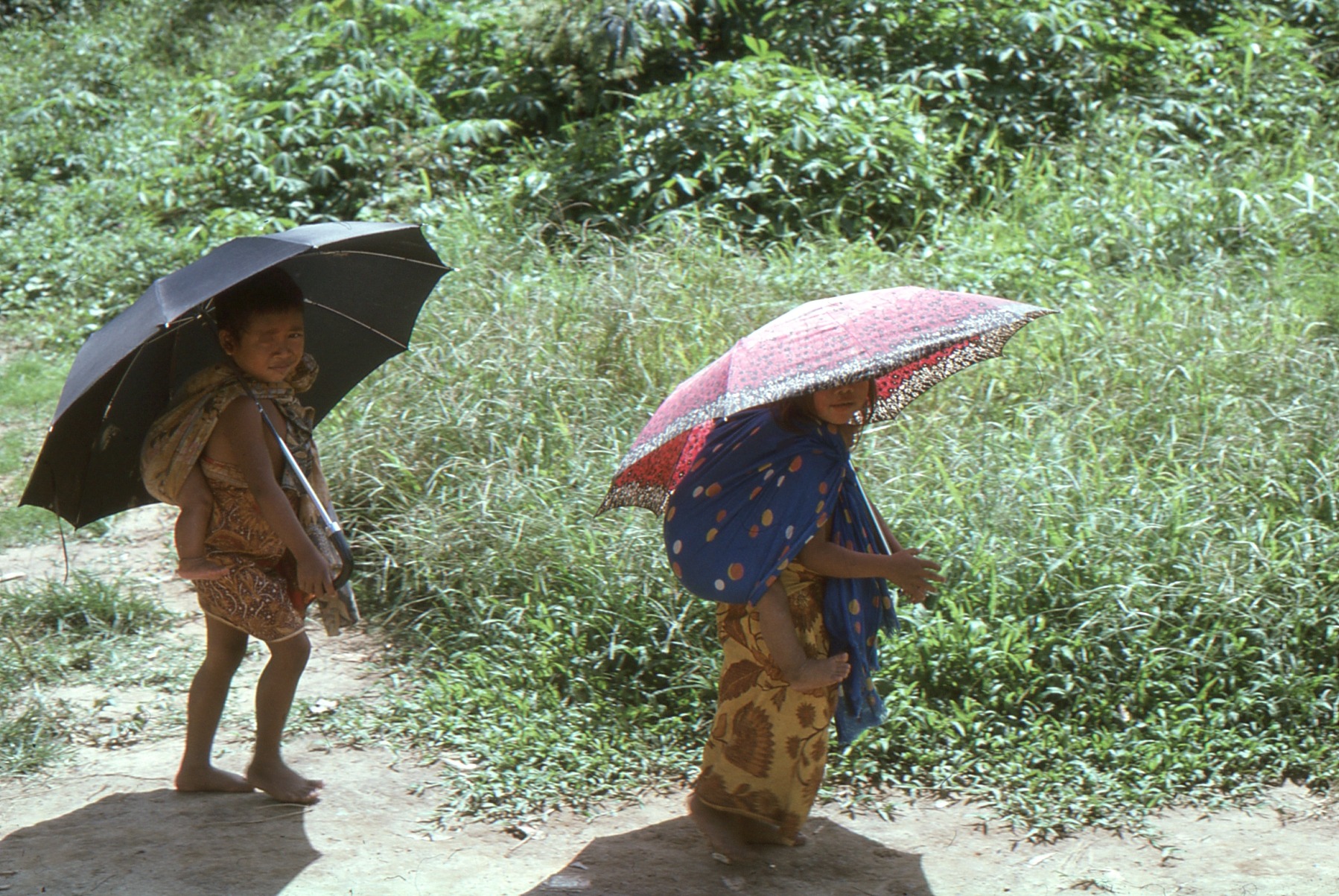
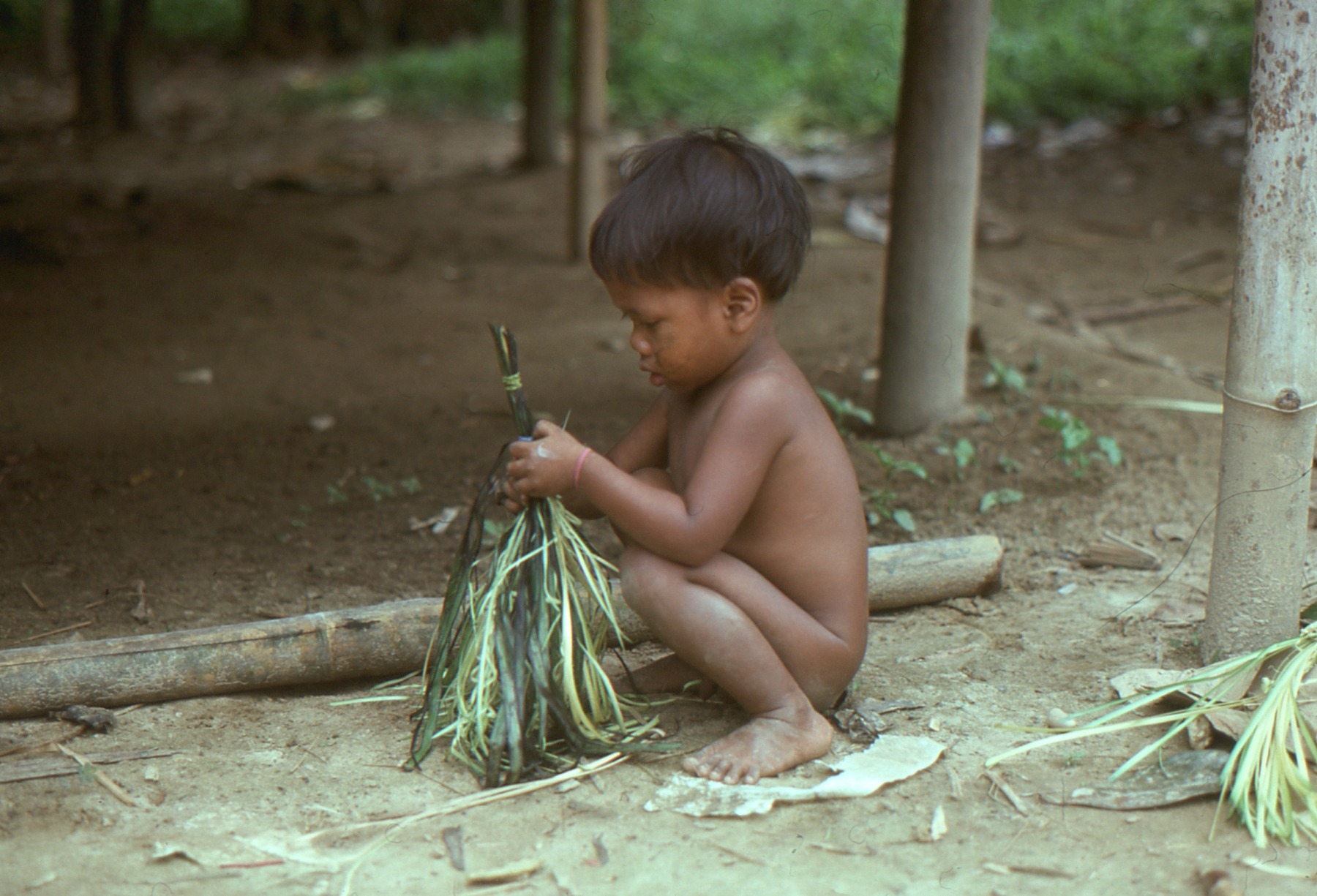
The photographs preserve small pieces of that everyday life. Children caring for younger brothers and sisters. Families cooking tapioca. People fishing from dugout canoes. Baskets being woven. Sarongs tied beneath houses and turned into swings. Clothes being washed in the river. These are not illustrations of “Temiar life” in general. They are fragments of the particular world Sue, Andy and the family were part of during those two years.
Listening and learning
Listening, dreaming and learning
Sue’s research grew from living there rather than arriving with a fixed set of questions. Conversations about dreaming, healing, ritual, performance and everyday life gradually became part of the work that later informed her PhD and writing.
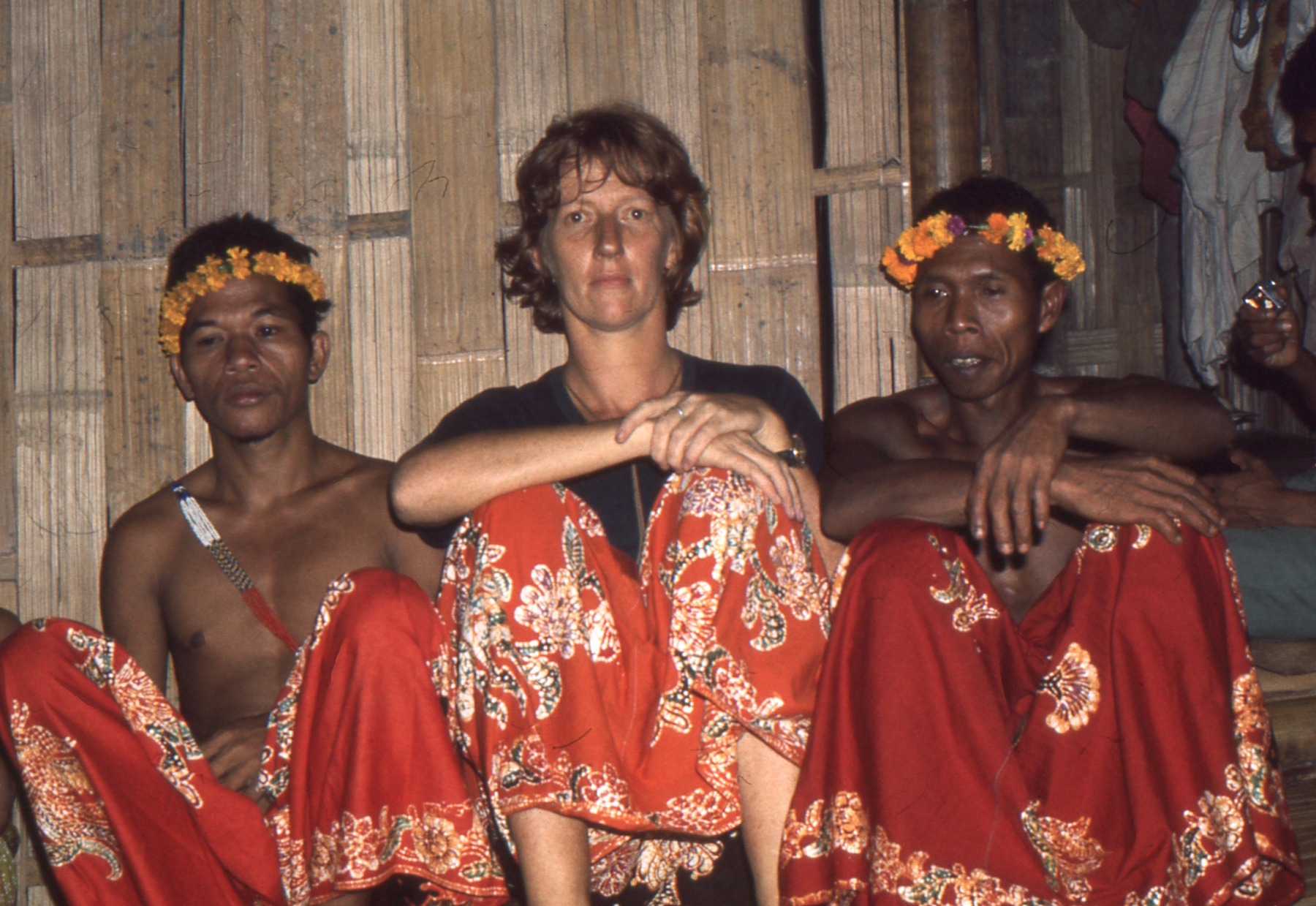
Andy was growing up at the same time. This was where he learned photography, and the majority of the surviving photographs from those two years were taken by him. Sue also involved Andy in her research. Because he could spend time talking with Temiar boys and men, both young and old, he was sometimes able to hear perspectives and gather information that Sue herself was less able to access.
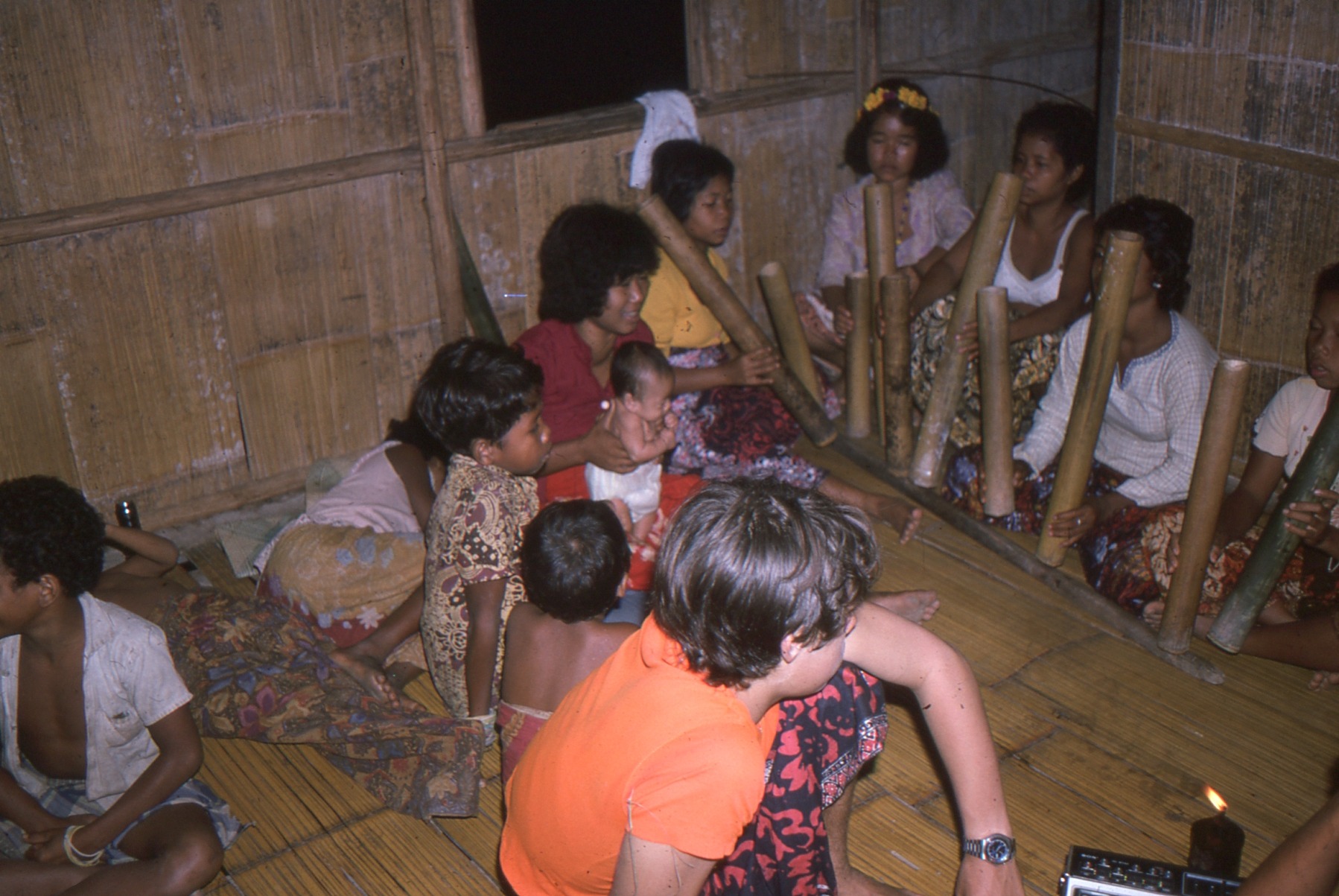
He was also learning simply by being there. One photograph shows a young Andy learning how to sing in Temiar. Another shows his sister with Temiar girls learning songs and playing bamboo stompers.
Across decades
Returning
The family eventually left, but the relationships did not end.
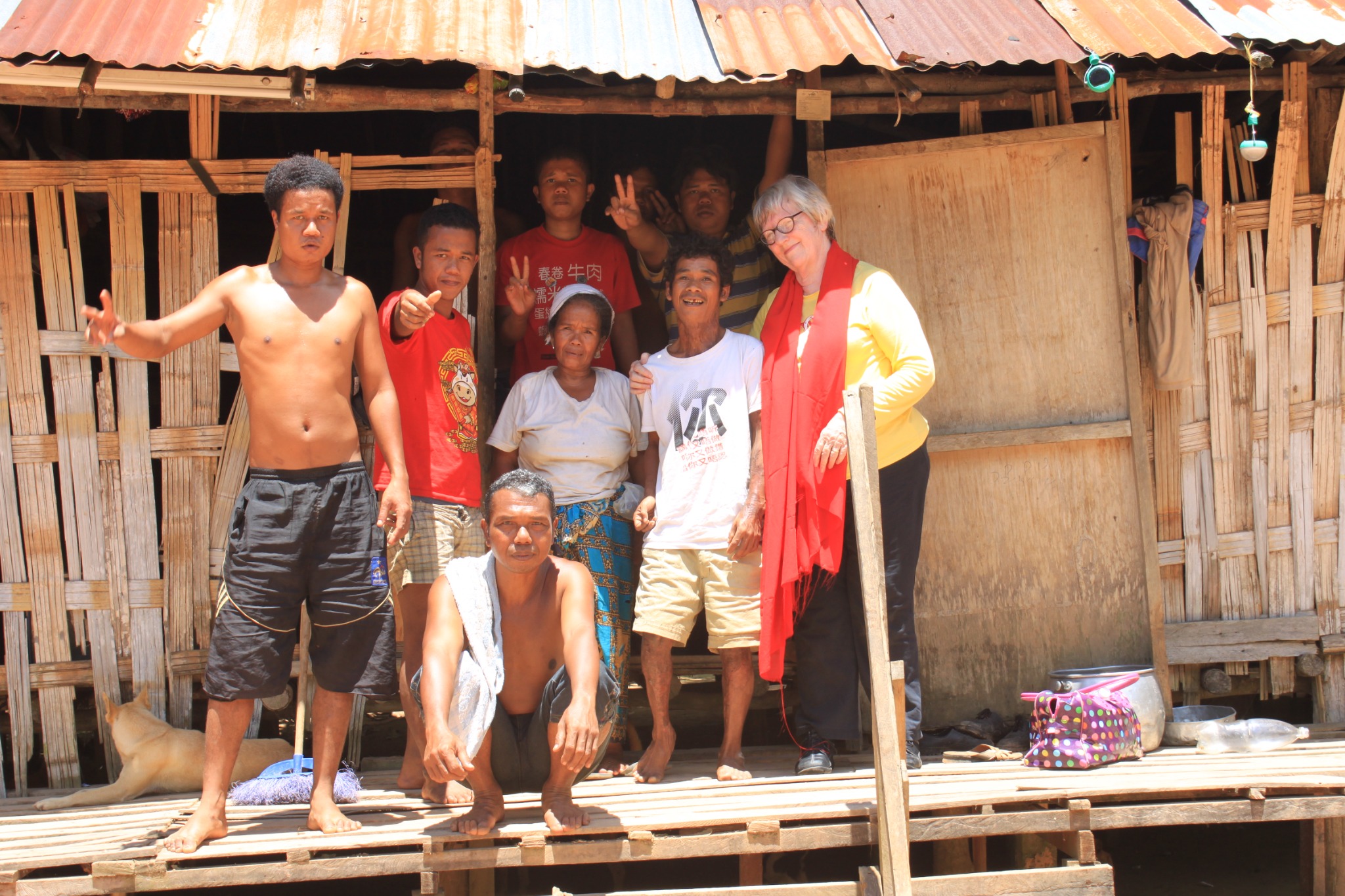
Sue and Andy have returned many times over the decades, sometimes for research or shared projects and sometimes simply to visit friends and family. Their connection with the Temiar has included weddings, funerals, everyday family life, journeys, celebrations and time spent together without any formal purpose.
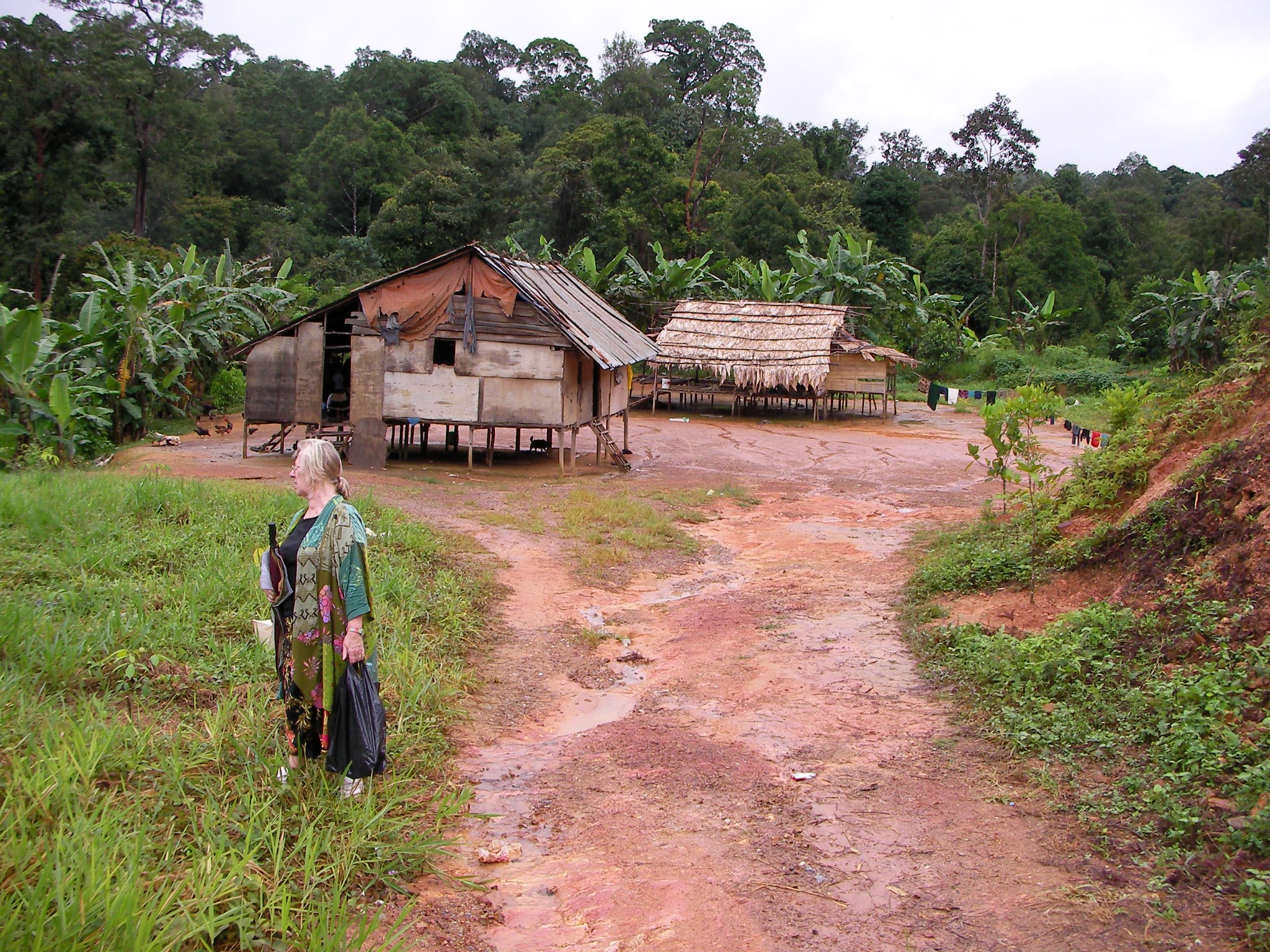
Later photographs show Sue sitting outside Temiar houses with friends and family, Andy swimming in the river, Sue preparing for gabag, and familiar relationships continuing many years after the original two year stay.
One image shows Sue outside the village, visibly sad to be leaving. It is a small moment, but it says something important about the nature of the relationship. These were not occasional visits to an unfamiliar place. They were returns to people and places that had become part of family life.
The river appears repeatedly across the archive. It was part of everyday life in the 1970s and remains part of the memories, journeys and return visits that followed.
Gathering
Gabag
Gabag appears in photographs from the 1970s and from more recent visits, connecting moments of gathering across different generations.
Preparing for a gabag is part of the event itself. Leaves, flowers and other plant materials are gathered, woven and hung around the space. Some of the central hanging leaves have a particular role within the gabag and are used by Temiar shamans when contacting the spirit world.
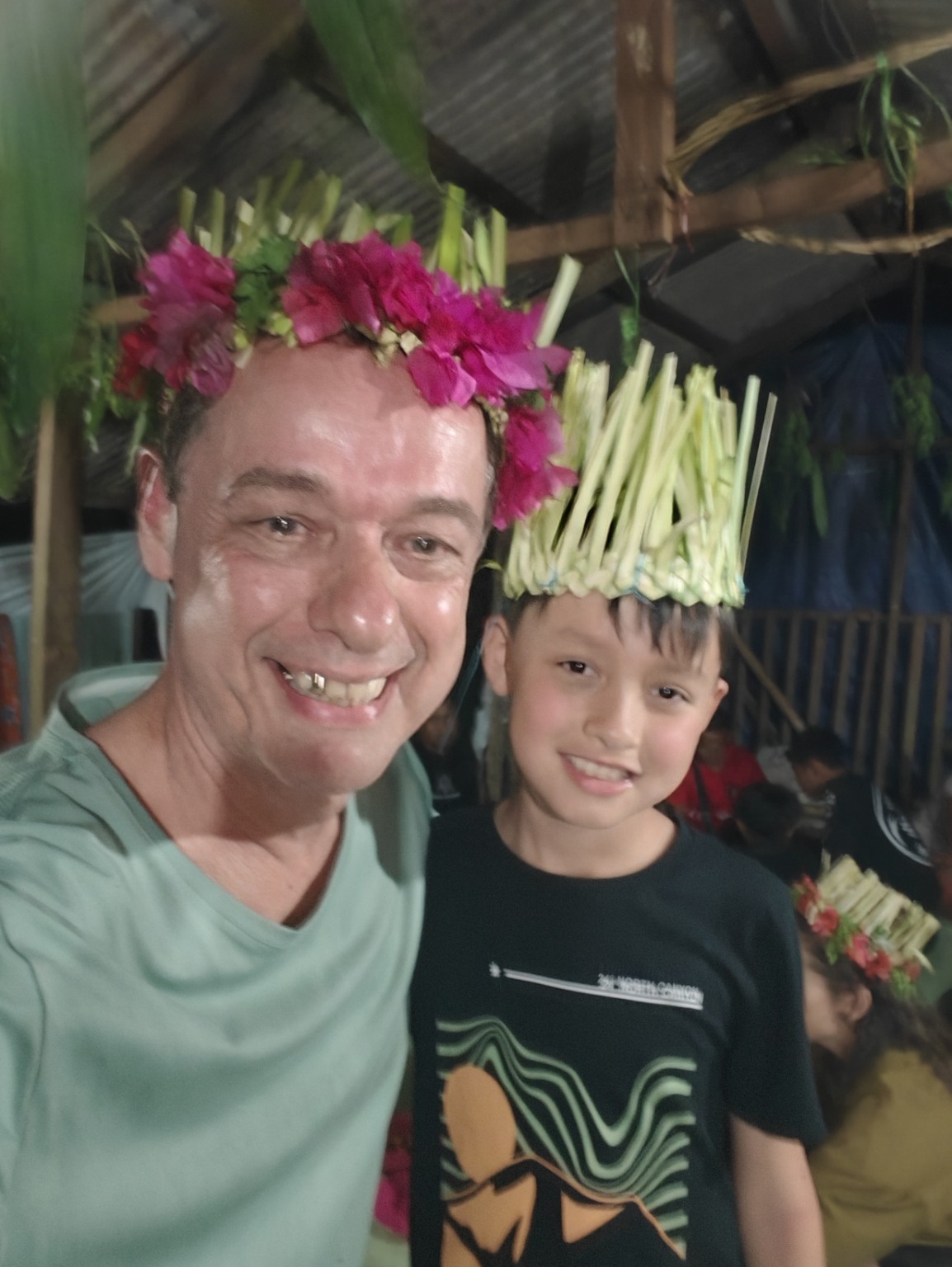
The archive contains photographs from different periods showing people preparing for gabag, making headpieces and decorations, gathering together and taking part. In the 2026 photographs, Temiar women prepare leaves and flowers while NDP students sit alongside them and learn traditional weaving. Andy is presented with his gabag headpiece, and later adults and children move and dance together as the gathering begins.
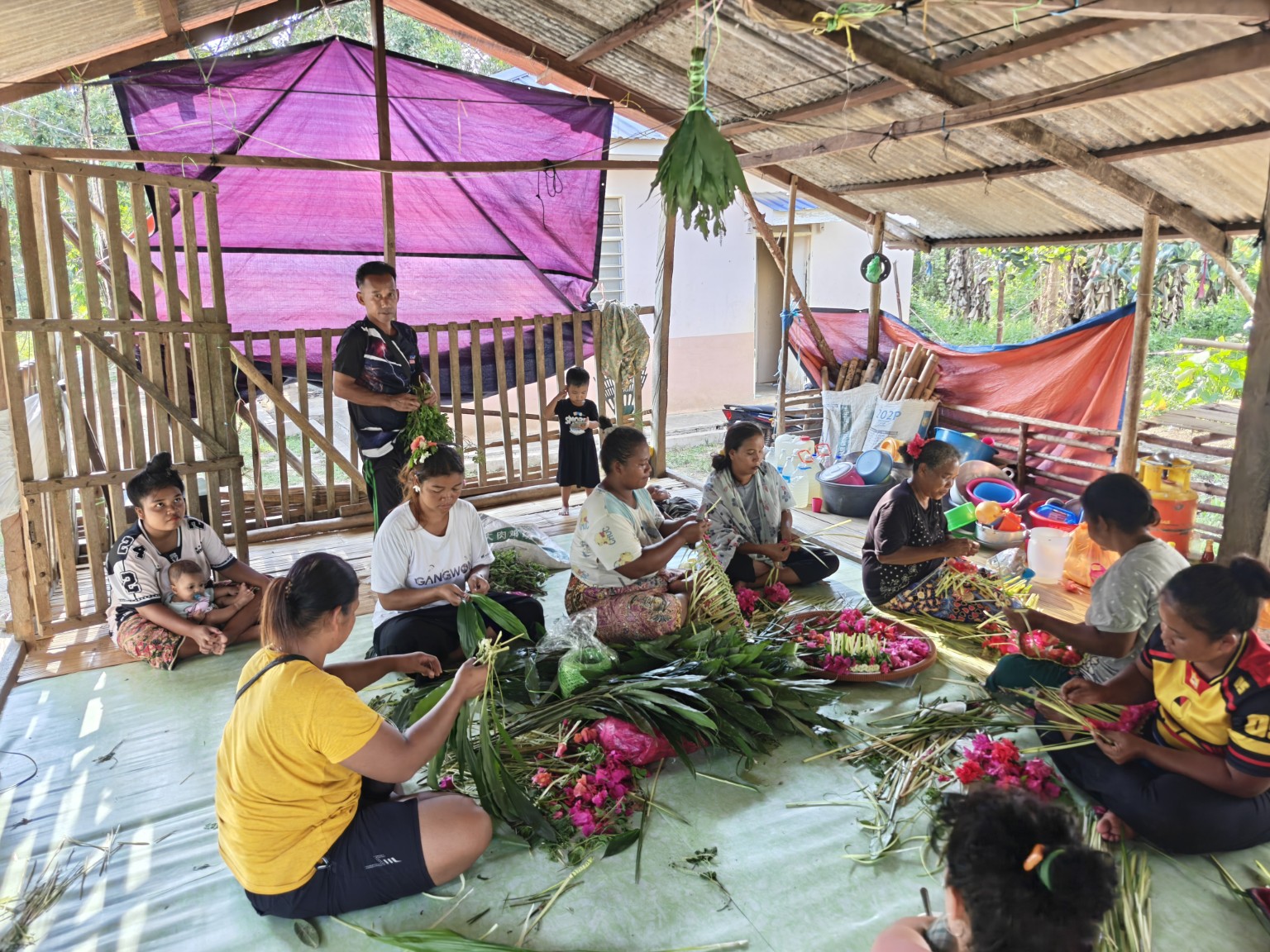
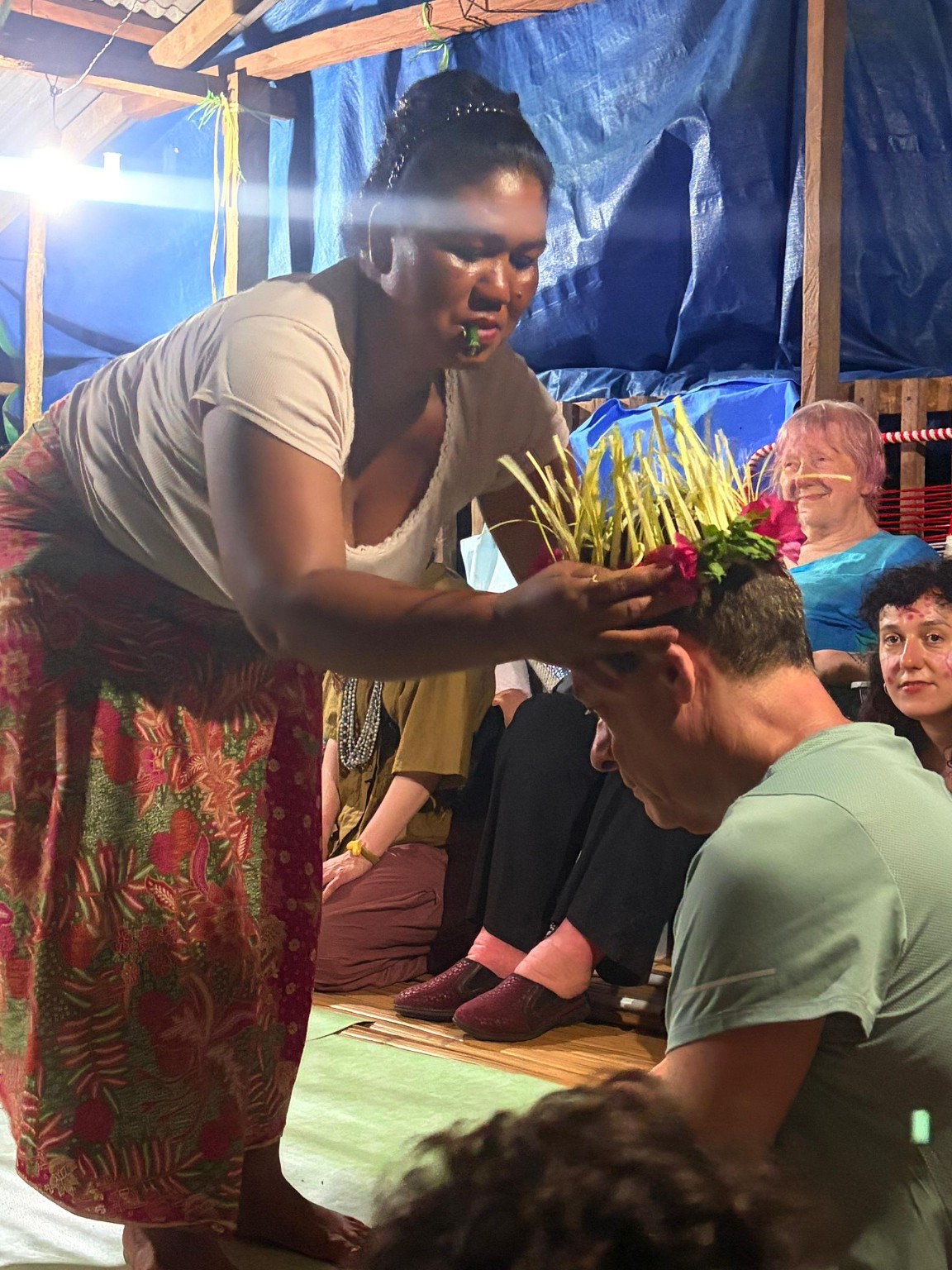
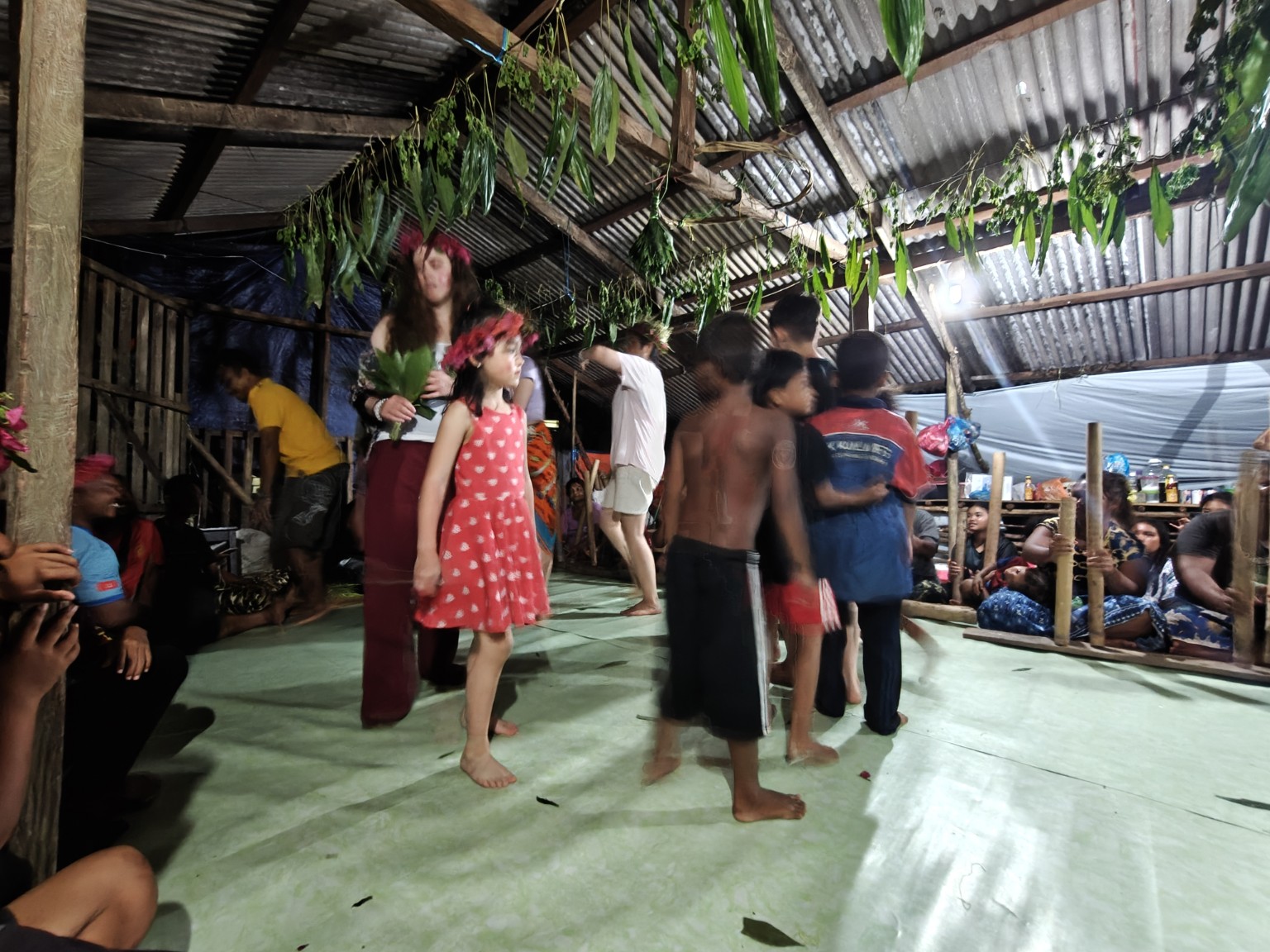
The photographs matter because they show gabag not as something belonging only to the past, but as part of relationships and practices that Sue, Andy and their families have continued to encounter and take part in across many years.
Shared practice
Learning from each other
Later projects continued the same principle of learning by doing things together.
In 2026, Temiar people taught NDP students traditional weaving and how to make bamboo rafts. The raft making began in the river, with Temiar people showing students how the bamboo was selected, tied and assembled.
The finished rafts were then used. Everyone went downriver together.
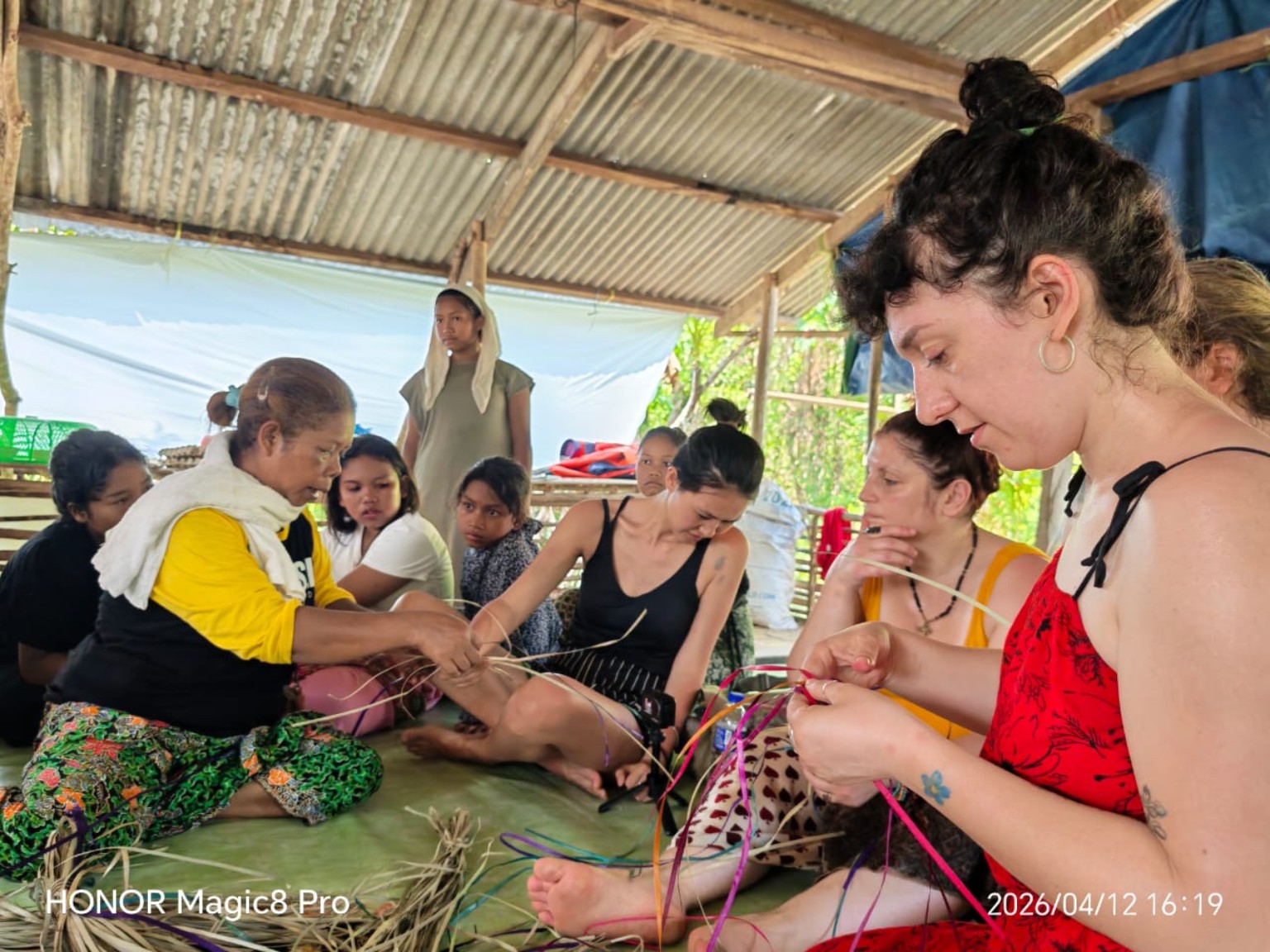
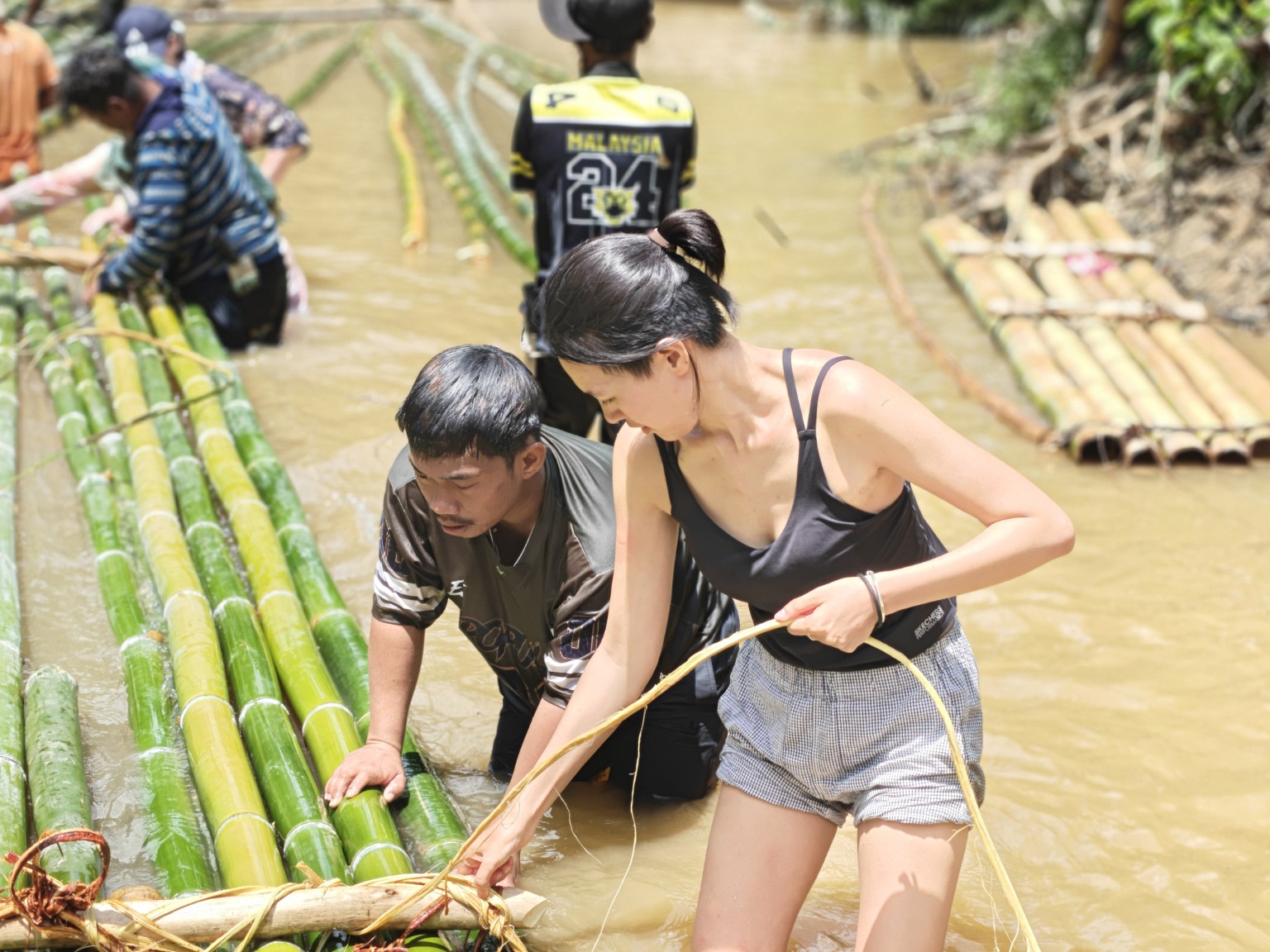
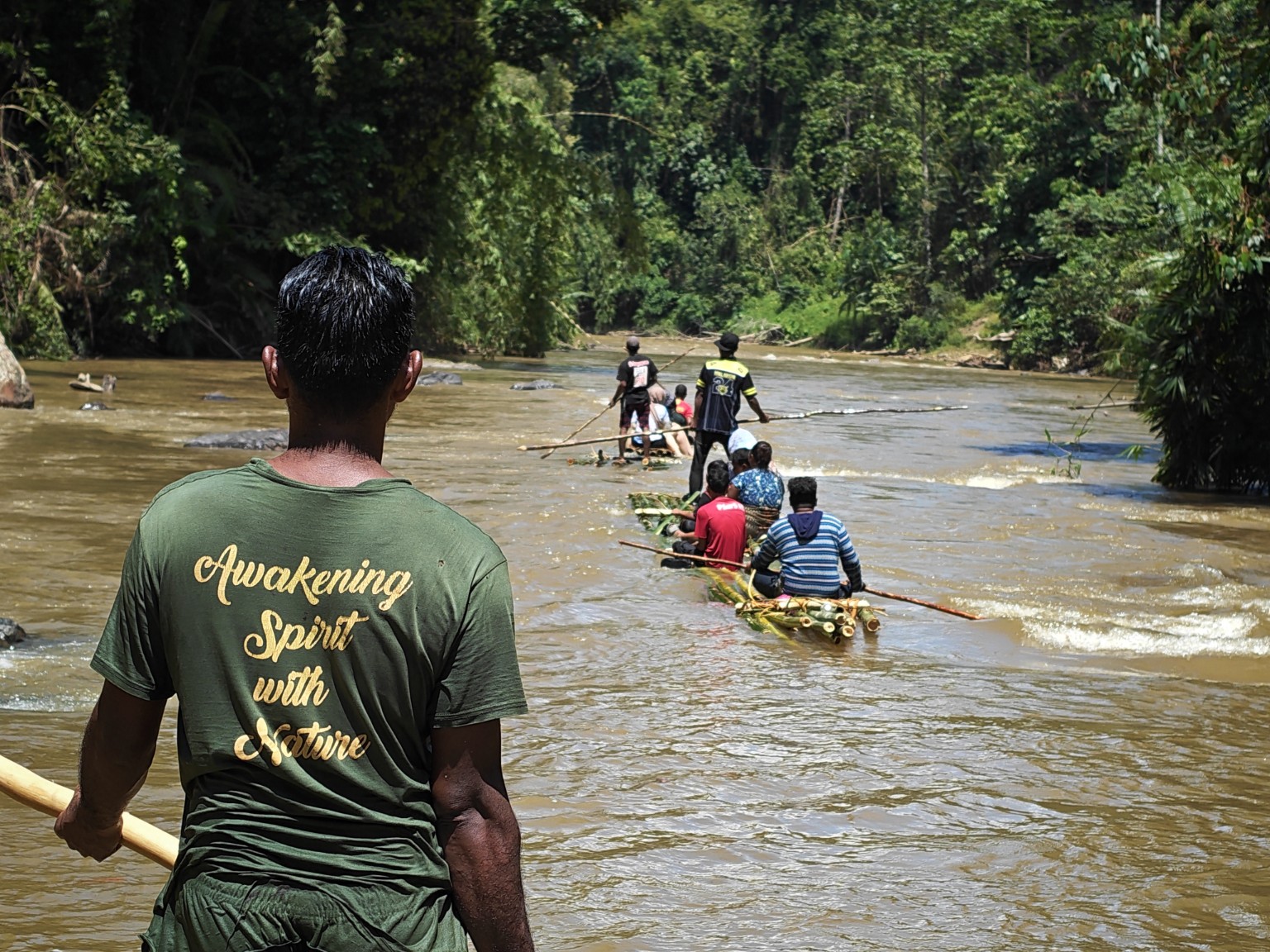
Sue has also run creative sessions with Temiar children, while other photographs show Temiar schoolchildren learning traditional Temiar weaving at school.
These images sit alongside one another rather than suggesting that learning travels in only one direction. They show people making, teaching, trying things, sharing knowledge and joining in together.
Then and now
The landscape changes
The journey itself shows how much the surrounding landscape has changed.
What once took around two days to reach can now be reached by four wheel drive from Kuala Lumpur in under five hours.
Logging, new roads and plantation development have transformed much of the landscape encountered on later visits. Andy’s photographs from Kelantan, taken between 2016 and 2020, record timber trucks, logging roads, felled trees and hillsides where forest has been cleared.
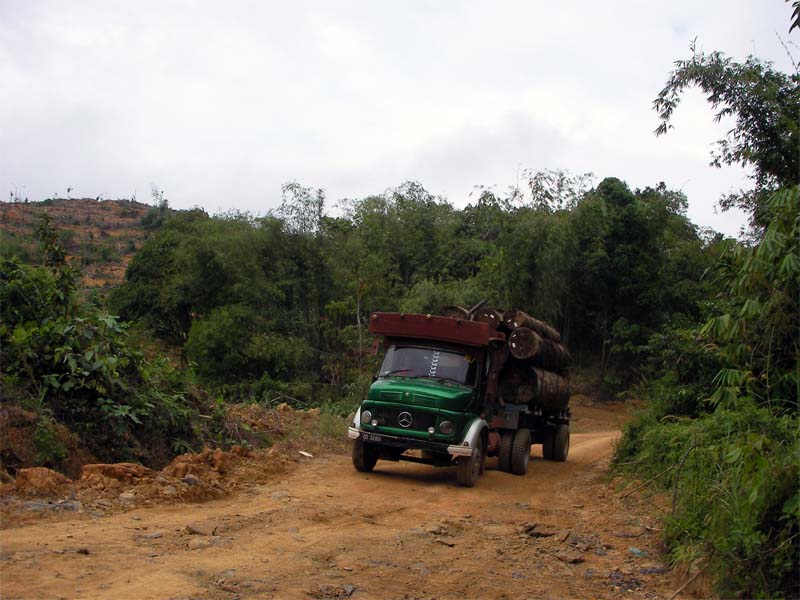
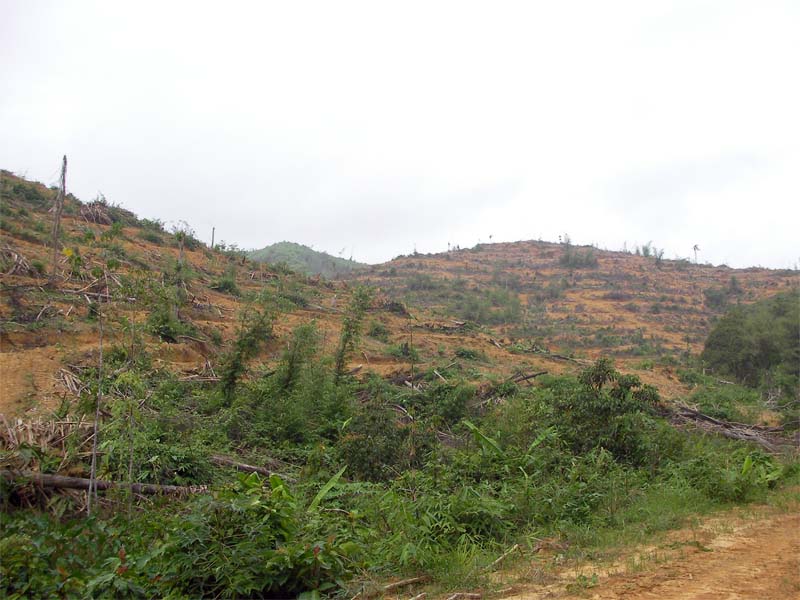
This archive does not attempt to tell the complete story of logging, land rights or environmental change. Those histories are much larger than this page. But they are part of the changes Sue and Andy have witnessed during more than five decades of returning to Kelantan.
The deeper archive can also follow some of the people and organisations connected with this story, including Colin and COAC and their work alongside Temiar and other Orang Asli communities.
Across generations
Another generation
The story began with Sue taking her three children to live in the Malaysian jungle in the early 1970s.
Decades later, Andy has taken his own children back many times so that they too could spend time with Temiar friends and families, learn from them and become part of relationships that began before they were born.
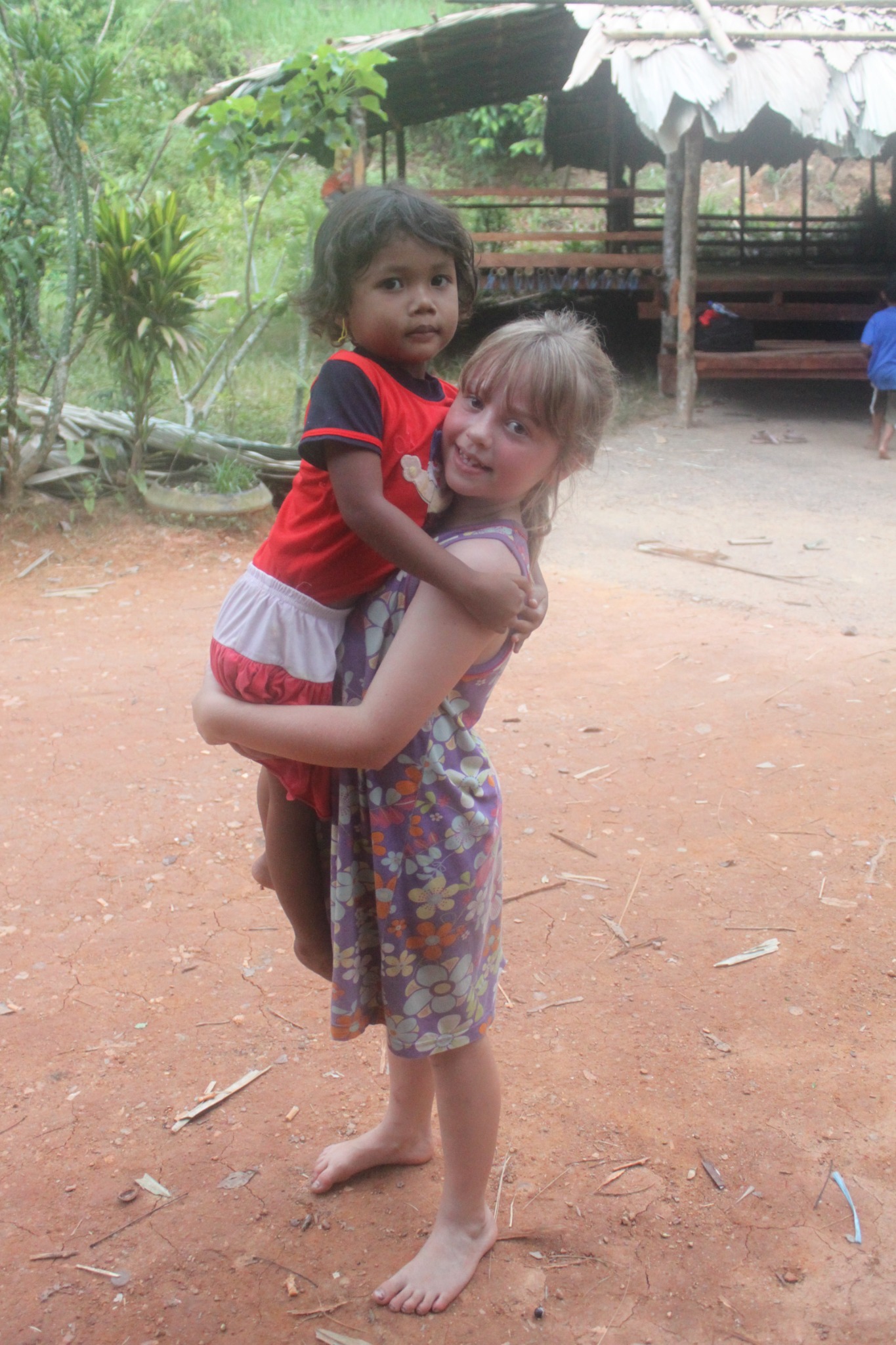
One photograph shows Andy’s daughter with a Temiar child. Another shows Andy with his son at the gabag. They bring another generation into a story that has already stretched across more than fifty years.
More than fifty years on, the friendships, family connections and shared projects are still part of Sue and Andy’s lives. They are also working to help Temiar people visit the United Kingdom, with the hope of making visits between the two countries more reciprocal.
The journeys have changed and the landscape has changed. New generations are taking part. The relationships continue.